
Low-frequency noise presents a persistent challenge across industries such as aerospace, automotive, and industrial equipment. Unlike high-frequency sound, low-frequency vibrations travel efficiently through structures, making them difficult to control using conventional acoustic materials. These vibrations can propagate through panels, enclosures, and structural components, impacting product performance, reducing user comfort, and creating significant design constraints for engineers and manufacturers.
Traditional soundproofing materials, such as foams and fibrous insulation, are often ineffective at attenuating low-frequency noise without adding significant weight and thickness. This is because low-frequency sound waves have longer wavelengths and higher energy, requiring thicker or denser materials to achieve meaningful attenuation.
As industries continue to demand lighter, more compact, and more sustainable solutions, there is an increasing need for advanced acoustic technologies capable of addressing low-frequency vibration more efficiently.
Understanding Low-Frequency Noise and Structural Vibration
All sound originates from vibration, but low-frequency noise behaves differently from higher-frequency sound waves. Low-frequency vibrations contain longer wavelengths and can transfer energy through solid structures more easily. This allows vibration to propagate across connected components, amplifying unwanted noise and reducing overall acoustic performance.
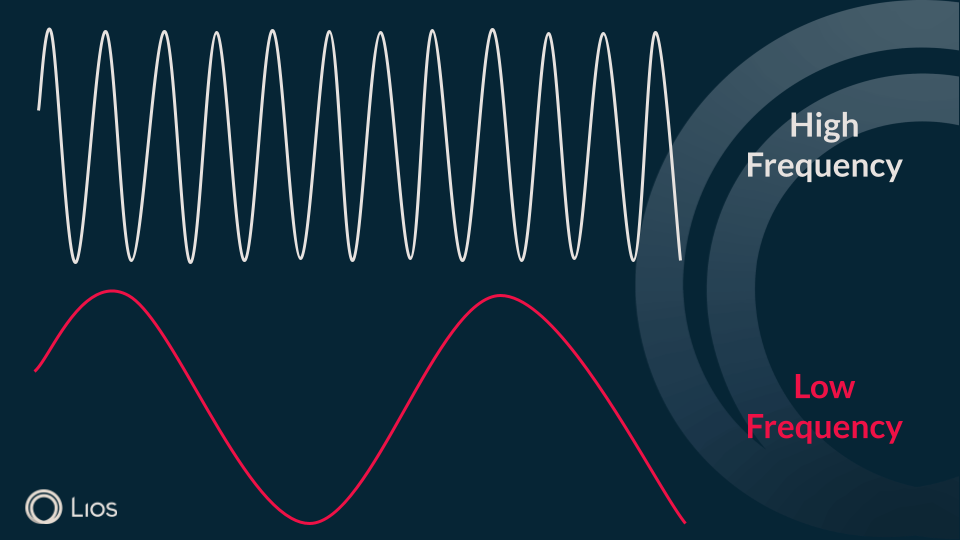
In many applications, low-frequency noise is not only transmitted through air but also through structural vibration. Mechanical systems, including HVAC systems in buildings, vehicle engines, and aircraft rotors, generate vibrational energy that moves through structural pathways. As this energy travels, it can radiate noise from panels, casings, and enclosures, increasing overall system noise levels. This makes low-frequency noise particularly difficult to control using traditional airborne sound absorption methods alone.
Effective low-frequency noise reduction, therefore, requires managing both airborne sound and structural vibration. By controlling how vibrational energy propagates through materials, engineers can reduce noise at its source and prevent amplification across the structure.
Limitations of Traditional Acoustic Materials
Conventional acoustic materials rely primarily on mass and thickness to reduce sound transmission. According to fundamental acoustic principles, improving low-frequency noise attenuation typically requires increasing material thickness or density. However, this approach introduces significant challenges for modern engineering applications, where weight and space constraints are critical.
In industries such as aerospace and automotive engineering, additional weight directly impacts fuel efficiency, performance, and sustainability. Similarly, increasing material thickness can limit design flexibility and integration within compact systems. As a result, traditional acoustic solutions often create trade-offs between acoustic performance and engineering requirements.
These limitations have driven the development of new acoustic materials designed to deliver high-performance noise reduction without compromising weight, size, or efficiency.
Advanced Acoustic Materials for Low-Frequency Noise Reduction
Recent advances in acoustic materials have introduced more engineered approaches to low-frequency noise reduction. At Lios, this has led to the development of SoundBounce, an advanced acoustic composite material designed to manage low-frequency vibration more efficiently. Acoustic advanced materials are engineered with precise geometries that enable them to control how sound waves and vibrations propagate through the material. This allows for targeted attenuation of low-frequency noise while maintaining lightweight and compact designs.
Unlike conventional acoustic insulation, advanced damping and material solutions can dissipate vibrational energy more efficiently. By interacting directly with structural vibration, these materials reduce noise at its source rather than relying solely on passive absorption. This enables engineers to achieve improved acoustic performance while maintaining optimal structural and design efficiency.
SoundBounce: An Advanced Acoustic Material Designed for Low-Frequency Noise Reduction

Soundbounce is a novel advanced acoustic material developed by Lios to address the limitations of traditional noise reduction solutions. As a composite acoustic material, SoundBounce uses energy-absorbing material properties and a cellular structural design to efficiently dissipate vibration energy and reduce noise transmission.
Conventional acoustic insulation that depends on increased mass and thickness, SoundBounce is engineered to provide superior noise attenuation while remaining thin, lightweight, and adaptable. This enables engineers to integrate effective low-frequency noise reduction into products without compromising space, weight, or overall system performance.
Engineered for Structural Vibration Control
SoundBounce is particularly effective at controlling low-frequency vibration, which is one of the most challenging forms of noise to mitigate. Its composite material structure interacts directly with vibrational energy, reducing the propagation of vibration through structural components such as panels, enclosures, and mechanical systems.
This makes SoundBounce highly suitable for applications where structural vibration is a primary source of noise, including aerospace systems, automotive components, industrial equipment, and advanced manufacturing technologies.
Supporting Lightweight and Sustainable Engineering Design
Modern engineering increasingly requires solutions that improve performance while supporting sustainability and efficiency. SoundBounce enables manufacturers to achieve high acoustic performance without relying on heavy or bulky traditional materials. Its lightweight and compact form factor supports improved product efficiency, increased design flexibility, and reduced environmental impact.
These characteristics make SoundBounce a valuable acoustic material solution for industries where acoustic performance, weight reduction, and sustainability are critical design priorities.
The Future of Acoustic Materials and Industrial Noise Control
As engineering systems become more advanced, the demand for efficient and sustainable acoustic solutions will continue to grow. Advanced acoustic materials are enabling a new generation of noise reduction technologies that support lightweight design, improve product performance, and enhance overall system efficiency.
By addressing low-frequency noise through innovative material design, companies can overcome traditional acoustic limitations and unlock new possibilities for product development. These technologies are helping engineers develop quieter, more efficient, and more sustainable products across a wide range of industrial applications.


